
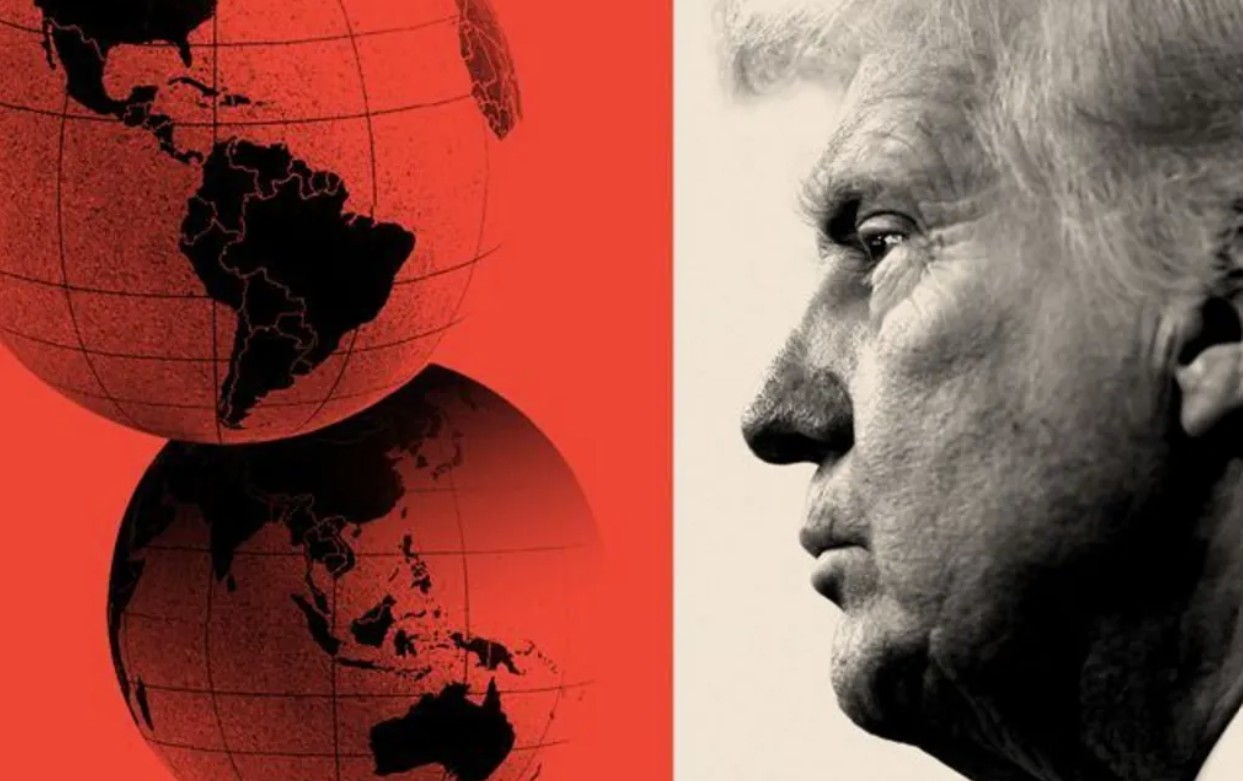
There’s another remarkable aspect in the mess provided by Trump this last year to the world. That, after 12 months since the commander in chief had taken office, the West finally seems to have pulled off the mask.
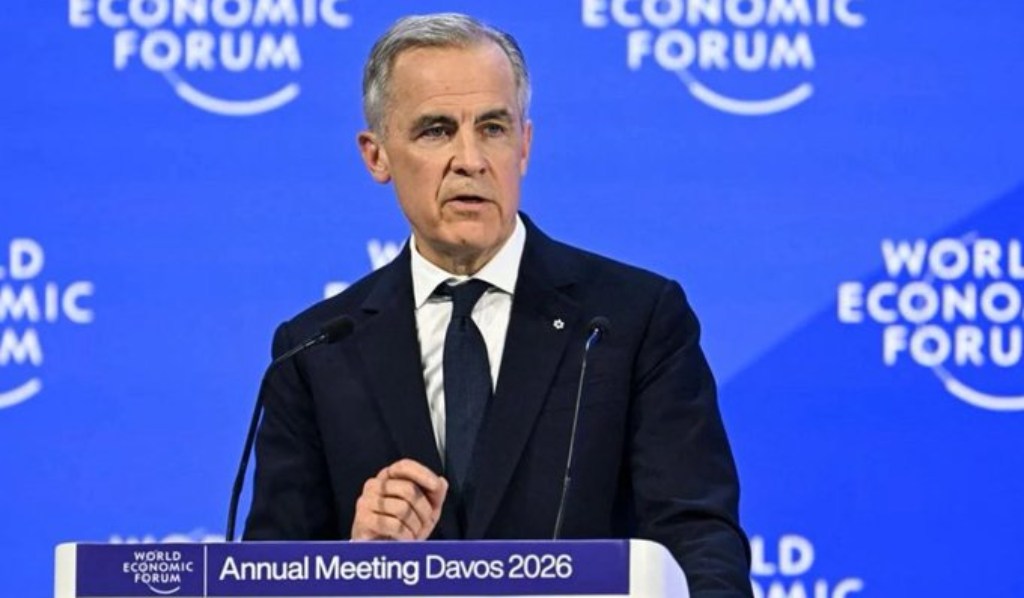
One remarkable example – and the first, maybe, at this level – was the unexpected, surprising speech given by Canadian prime minister Mark Carney at the World Economic Forum in Davos, a ski resort in Switzerland.
Said Carney: “[…]We knew the story of the international rules-based order was partially false. That the strongest would exempt themselves when convenient. That trade rules were enforced asymmetrically. And we knew that international law applied with varying rigour depending on the identity of the accused or the victim”. “This fiction was useful. And American hegemony, in particular, helped provide public goods: open sea lanes, a stable financial system, collective security and support for frameworks for resolving disputes”.
To conclude: “Let me be direct: We are in the midst of a rupture, not a transition. Over the past two decades, a series of crises in finance, health, energy and geopolitics have laid bare the risks of extreme global integration. But more recently, great powers have begun using economic integration as weapons. Tariffs as leverage. Financial infrastructure as coercion. Supply chains as vulnerabilities to be exploited. You cannot ‘live within the lie’ of mutual benefit through integration when integration becomes the source of your subordination”. Welcome to the era of geo-economics.
—
That’s, more or less, what antagonist movement keep saying since decades; but never in life I would’ve thought I’d be seeing such a speech pronounced by a Western leader in front of a bunch of rich capitalists and head of states.
Canada is under threat by the US, obviously; and looking for allies among middle-sized powers, as Carney remarked. But, still, it looks sort of a tipping point.
There’s more.
This morning I read an opinion piece on the BBC website authored by senior correspondent Allan Little. The journalist recalls a lecture he gave to the young students of Columbia University in New York just months after 9/11 2001.
One of them, a Pakistani just gotten to the US, took him apart during a coffee break for a chat. He paralleled the US to the Roman Empire.
“If you are lucky enough to live within the walls of the Imperial Citadel, which is to say here in the US”- the aspiring journalist stated with lucidity – “you experience American power as something benign. It protects you and your property. It bestows freedom by upholding the rule of law. It is accountable to the people through democratic institutions.
“But if, like me, you live on the Barbarian fringes of Empire, you experience American power as something quite different. It can do anything to you, with impunity… And you can’t stop it or hold it to account”.
Impressive.
To corroborate these words, Little then draws a picture of all the interventions in the so called Global South performed by Washington over the last couple of centuries. And there’s not much to be proud, apart from the intervention in WW1 and 2.
He concludes he’d been wrong at the time in describing the White House’s role to the students gathered to listen to him.
–
Same thing here: this is the BBC, British public television, not a socialist party house organ. Whilst provided with an enviable reputation as being independent, I would’ve never actually thought that the broadcaster would so openly admitted what the West – UK included – did over time to the rest of the world (well, the article didn’t mention the Iraqi invasion, but nobody’s perfect). There’s an explanation: Britain endend up being another of Trump’s targets for its defence on Greenland, and – as Canada – is looking for allies. But, nevertheless, this is sign of the times.
—
None of this would have happened without the New York tycoon’s turned president impulsive actions and excessive beaviour. Is it a sign of hope for the so called Global South? Well, in a way.
On the other hand, though, all this debate about the Arctic made me think that the world is still focused on the Northern emisphere. We’re getting closer than ever to a conflict over a piece of land and ship routes situated in the same part of the world that for ages dominated, colonized and exploited the rest of the globe. Even China recently described itself as an “Arctic power”, and is buying icebreakers.
Less than a year ago I was speaking to a top executive of a big German electronic brand. Asked which areas worldwide were supposed to make a jump forward, economically speaking and based on their projections, he answered – quite obviously – : South-east Asia. I replied: what about Africa? And South America? “No way”, he did.
The West might be pulling off the the mask. But, to quote the AC/DC, a rock band, “it’s a long way to top if you wanna rock’n roll”.
(photo: BBC website)
 Journalism, media and points of view