

giornalismo

What does it mean for a magazine to “transition away from publishing” / part 2

As some of you might know, in the last days Condé Nast communicated the intention to “transition away from publishing” Wired Italia. Whether this is true or just a negotiation tactic, it triggered a lot of considerations about the state of today’s journalism in our relatively small bubble of avid news readers. Being personally involved, moreover, as a long-time contributor pushed me towards doing the effort of getting in depth both in public and private chats.

In a previous post, I considered the possibility of Condé Nast turning the now-magazine in an event-first editorial product.

Someone, like Matteo Cerri (an Italian publisher, not involved in the matter) fundamentally agrees with this vision, based on a classic corporate economic concept. It was unavoidable (I summarize) given the editorial market and the fact that the Ai allows to make a newsmagazine with a tiny fraction of the personnel. That, moreover, can be rerouted on other projects (like live interviews) in which the human role is still fundamental. A sort of Ted X under Wired’s brand. In the end, who the hell would accept being interviewed by an avatar?

This would probably still be journalism (being a good interviewer is not easy; and the price for impreparation is irrelevance), but of another kind. And, maybe, less valuable for the society itself. We’d loose our “boots on the ground” approach, in favor of a “drone approach” (Sun Tzu’s Art of war is still base to a number of marketing courses: so, I’m not inventing anything with this comparison).

***

Consequentially, and that’s another topic I often discussed in private chats and public conversations, we fatally get to a question: can we really treat the press just like any other industry? Sure, it has more or less always been like this for publishers; but the role of democracies’ watchdog is too important to be underrated or equalized to beauty farms or pet food.

Acting as a devil’ lawyer, I used to answer that nobody has found the recipe to conjugate business and social impact, yet. But, in reality, there’s already someone who’s trying to make business differently: the so-called B-Corps.

Which (with some limits I’m not going to discuss here) have a community-oriented approach.

But what is a B-Corp? Briefly put, these companies consciounsly renounce to a part of their profits – or, to say it in another way, to the maximum optimization and efficiency – to pursue an impact on the people and the planet.

So, if a publisher like Condé Nast considers closing Wired Italia for economic reasons, and we had to find a reason to ask them to think again about it, we could say that it already has a number of other incredibly performing outlets in its bouquet.

Like, for example, Vogue Italia; and – with all due respect to fashion and pop culture – we’re not talking of the same impact in terms of democracy.

I explain: Wired Italia started talking about digital surveillance, algorithms’ ethic, Big Tech’s malpractices, and even climate tech and renewables when these topics just deserved a small article at the bottom of traditional media: it shaped the debate, paving the way to others. And there’s no need to further underline the importance of these topics in today’s world. Vogue Italia can well sustain the burden of a less profitable (but, as far as I know, not unprofitable) news outlet like Wired Italia.

Even companies operating on average economic sectors are considering the switch towards a B-Corp minded way of doing business. Why in the world can’t a liberal publisher like Condé do the same?

***

Here comes another consideration.

In this “transitioning away from publishing process” involving artificial intelligence, what’s happening to the content already published? Will it be sold with some sort of agreeements to actors like Open AI? Stop guessing. It already happened.
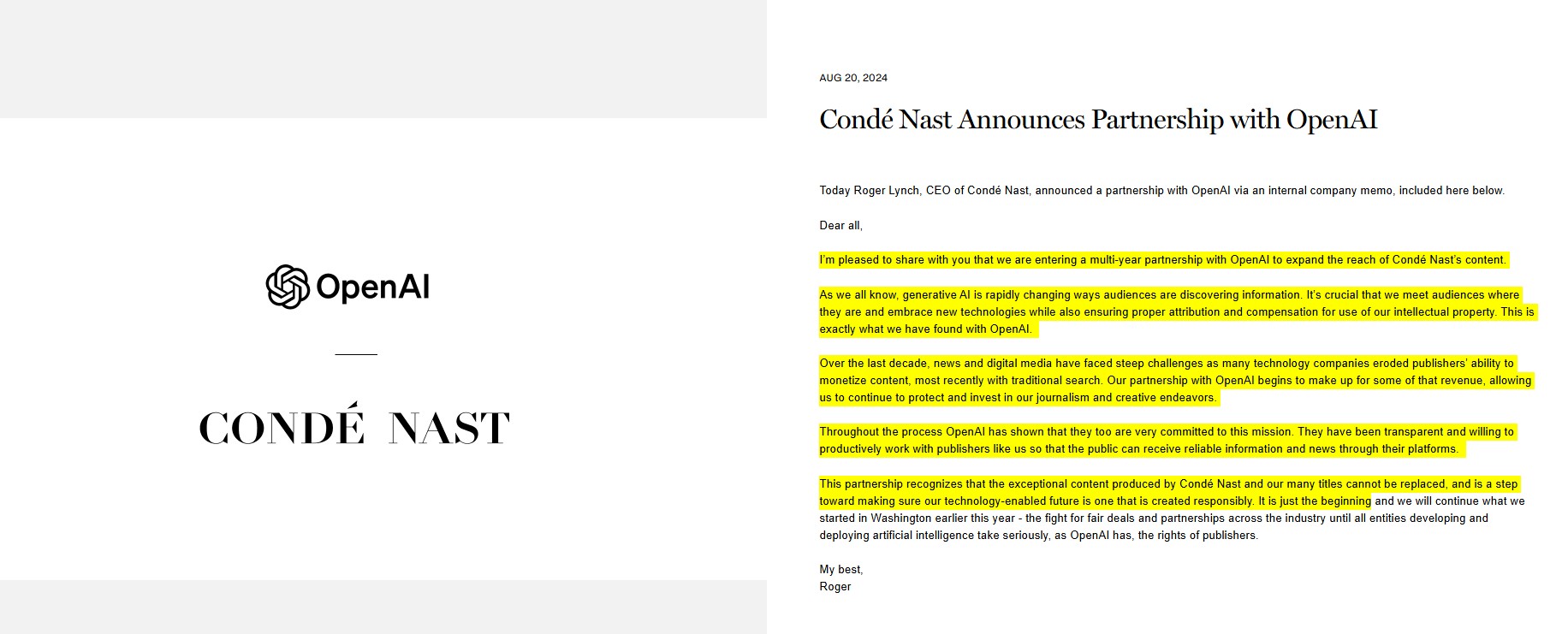
You can find here Open AI’s version, and here Condé Nast’s. I quote from the latter.

“I’m pleased to share with you that we are entering a multi-year partnership with OpenAI to expand the reach of Condé Nast’s content”, wrote ceo Roger Lynch in August 2024.

As we all know, generative AI is rapidly changing ways audiences are discovering information. It’s crucial that we meet audiences where they are and embrace new technologies while also ensuring proper attribution and compensation for use of our intellectual property. This is exactly what we have found with OpenAI. 

Over the last decade, news and digital media have faced steep challenges as many technology companies eroded publishers’ ability to monetize content, most recently with traditional search. Our partnership with OpenAI begins to make up for some of that revenue, allowing us to continue to protect and invest in our journalism and creative endeavors.

Throughout the process OpenAI has shown that they too are very committed to this mission. They have been transparent and willing to productively work with publishers like us so that the public can receive reliable information and news through their platforms. 

This partnership recognizes that the exceptional content produced by Condé Nast and our many titles cannot be replaced, and is a step toward making sure our technology-enabled future is one that is created responsibly. It is just the beginning [….]

So the incredibly valuable content written by Wired journalists’ over the course of the years might be already used to train those very AI systems cannibalizing them.

Condé is not alone. Stated Open AI: it joined “a growing list of publishers including Associated Press, Axel Springer, The Atlantic, Dotdash Meredith, Financial Times, LeMonde, NewsCorp, Prisa Media, TIME, Vox Media and others, in our mission to integrate journalism more deeply with AI services”.We’re committed to working with Condé Nast and other news publishers to ensure that as AI plays a larger role in news discovery and delivery, it maintains accuracy, integrity, and respect for quality reporting“, added Brad Lightcap (COO at OpenAI).

Quite every editorial group had to come to terms with AI. And it’s not clear if anyone’s found yet a way to maintain the journalists employed giving them an additional tool or it’s simply impossible.

Yes, it’s just the beginning.

Ps You can sign this petition to save Wired Italia, if you want.
Standard
internet

5 motivi per cui la neutralità della Rete è una cosa seria

Questo articolo è stato pubblicato originariamente su StartupItalia!


Da lunedì la norma federale sulla net neutrality (la neutralità della rete) in vigore dal 2015 e voluta dall’amministrazione Obama non è più in vigore negli Stati Uniti. L’abrogazione da parte della Federal Communications Commission ha allarmato attivisti e opinione pubblica oltroceano. Con qualche ragione.

Il testo, in sostanza, andava a regolare il mercato che –  questo l’assunto – lasciato a se stesso avrebbe condotto al monopolio di pochi giganti in grado di dettare le condizioni: una sorta di monopolio de facto.

Ma la FCC, guidata dal presidente Ajit Pai, a dicembre ha votato a maggioranza per l’abrogazione. Impedisce l’innovazione, sostiene Pai. Dal suo punto di vista, non aveva senso stabilire un principio universale; è, piuttosto, preferibile intervenire sui singoli casi di fallimento del mercato.

I CINQUE PUNTI ESSENZIALI DELLA NET NEUTRALITY – Cosa cambierà per i cittadini USA? Probabilmente nulla, nell’immediato.

I singoli stati stanno provando a introdurre norme di tutela in 29 di essi, anche se l’iter non è concluso e in pochi casi si è arrivati all’adozione. Col sostegno dei democratici, molti enti locali proveranno a reintrodurre una regolamentazione.  Ma le grandi compagnie probabilmente aspetteranno che l’attenzione dei media cali per agire, e hanno senz’altro gli strumenti per farlo, che si tratti di mezzi economici o di possibilità di lobbying.

Se pensate di non saperne abbastanza, in 5 punti proviamo a riassumere perchè la neutralità della rete è importante. Per le startup, ma anche per voi.

  1. E’ quella che ha garantito lo sviluppo delle applicazioni che ci hanno cambiato la vita. Nonostante molte delle compagnie che si oppongono alla norma siano nate nel contesto di un “web libero” perché mancavano monopolisti (pensiamo ai social media, ma anche blog, strumenti di file sharing etc ), oggi il loro atteggiamento è mutato. Il problema è che le startup, che per dimensioni non sono in grado di competere con le big companies, potrebbero essere tagliate fuori dal mercato. In che modo? Vedi il punto 4.
  2. Nessuna discriminazione di contenuto (no blocking). Net neutrality significa che tutto ciò che è legale può stare in Rete allo stesso costo. Punto. Piaccia o non piaccia, non ci sono differenze. La regola è una, e vale per tutti. Nessuna app o contenuto poteva essere bloccato negli USA, fino a pochi giorni fa, se non da un giudice. E adesso? La musica potrebbe cambiare.
  3. Nessun rallentamento basato sul tipo di contenuto (no throttling). Anche qui parliamo, naturalmente, di contenuti legali. Non può esserci discriminazione basata sulla natura di siti e applicazioni; discriminazioni che, ovviamente, studiate in maniera strategica potrebbero distorcere il mercato e penalizzare la concorrenza. Si potrebbe, ad esempio, privilegiare alcune tipologie di servizi sulla base di fusioni o accordi strategici. Che i piccoli non hanno la forza di negoziare. Un esempio? L’acquisizione di Time Warner (che controlla Hbo e Cnn) da parte di At&t, secondo gestore wireless del paese. Un giudice federale è stato chiamato a decidere, dando via libera martedì.  Adesso, At&t potrebbe decidere di penalizzare i concorrenti in coda sulle affollate autostrade del web, sgomberando le corsie per sé.  Non solo: la sentenza potrebbe aprire la strada a operazioni simili tra colossi.
  4. Nessuna corsia preferenziale a pagamento (paid prioritization). E’ quello che temono molte startup. Vuoi andare veloce? Paga. In un settore, come l’e-commerce, dove un rallentamento di pochi secondi mina in maniera irrecuperabile l’usabilità, la velocità potrebbe diventare patrimonio esclusivo dei più grandi. I nomi? Provate a immaginarli.
  5. No ai pacchetti più costosi per usare certi programmi. Abolita la norma, una strategia di marketing potrebbe diventare quella di far pagare di più pacchetti che comprendono l’uso di certe applicazioni. Un po’ come avviene con la tv via cavo, avverte il New York Times. Vuoi usare Facebook e Twitter? Devi pagare per un’offerta speciale. Sembra fantascienza, ma meglio fermarsi a riflettere.ì

Infine una buona notizia: in Europa le cose stanno diversamente. Il quadro normativo tracciato dall’articolo 3 del Regolamento 2015/120 ci mette al riparo. Molte legislazioni nazionali hanno introdotto (o stanno introducendo) leggi anche più severe a tutela della neutralità della Rete. Può bastare a dormire sonni tranquilli? Per il momento, diremmo di si. Ma mai abbassare la guardia.

Standard
app, internet

TiSOStengo: la salute a portata di click

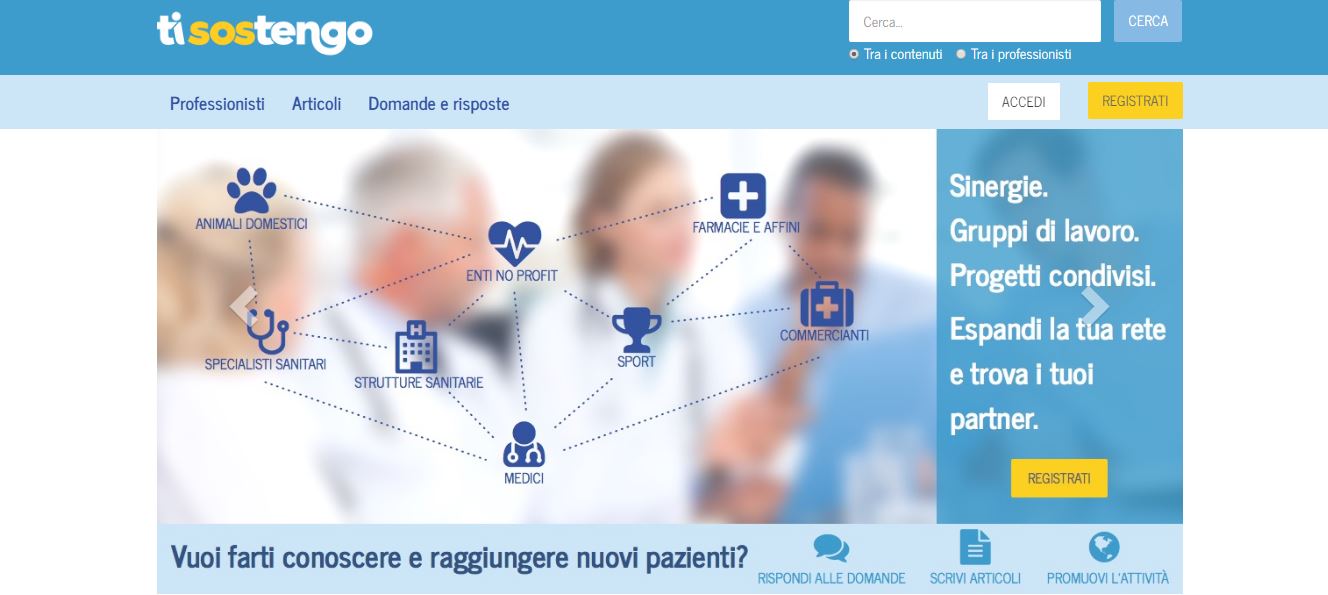
L’annuncio ufficiale non è  ancora stato dato,ma  TiSOStengo è online. In effetti, il portale è in rete da marzo, ma ha dovuto essere sottoposto a una fase di test necessaria per metterlo a punto. L’idea è innovativa: le funzioni di ricerca consentiranno di rintracciare le strutture sanitarie e assistenziali più vicine grazie alla geo-localizzazione. I professionisti potranno registrarsi sul sito e attrarre nuovi pazienti anche pubblicando interventi su tematiche mediche che ne dimostrino la competenza, mentre gli utenti potranno porre domande pubbliche ai medici (gratis) o inviare un messaggio privato (funzionalità su abbonamento).

tisostengo screenshot

Il motore che muove il sito è realizzato con le più recenti tecnologie ed è estremamente potente, mentre il layout è semplice. TiSOStengo nasce da un’idea di Vittorio Fontanesi, brianzolo di 34 anni con un passato in finanza come gestore di fondi per una delle più importanti realtà italiane. La sua esperienza familiare lo ha portato a essere il vero sostegno della sua famiglia nelle vicissitudini di salute che ha dovuto affrontare nel corso degli anni. Ora ha deciso di provare a metabolizzare il tempo passato tra le corsie degli ospedali e rilanciare, facendone un progetto che può essere di aiuto a molti. A me sembra un’idea, come direbbero gli inglesi, disruptive. E non perché ci lavoro. Nei prossimi giorni aprirà un blog che racconterà meglio tutti i passaggi. Intanto, se volete, potete dare un’occhiata al sito e alla testata di TiSOStengo. Buona lettura!

Standard
media

Salvare il giornalismo o i giornali?

“Salvare il giornalismo o i giornali?”. La domanda arriva da Mario Tedeschini Lalli e segna la linea di confine tra il passato e un futuro che, ormai, è qui. Un eccellente approfondimento di Magzine affronta il tema del futuro della professione giornalistica nelle parole di sei esperti. Le risposte sono sfaccettate, ma convergono tutte su un punto: tecnologia. Continua a leggere

Standard
internet, lavoro

Come distruggersi la reputazione online

Siamo in una civiltà molto più integrata, digitalmente parlando, di quello che ci piaccia pensare.

Chi per mestiere lavora anche lontanamente sul web non può permettersi di non conoscerne le dinamiche, o come direbbero i manuali, di non controllare le voci che lo riguardano nelle SERP di Google. Ma anche chi si occupa di altro dovrebbe stare attento a quello che pubblica. Blog, profili Facebook, account Twitter, Pinterest, Google Plus: qualunque  azione eseguita in Rete può vivere in eterno, e bisogna tenerne conto.

Continua a leggere

Standard