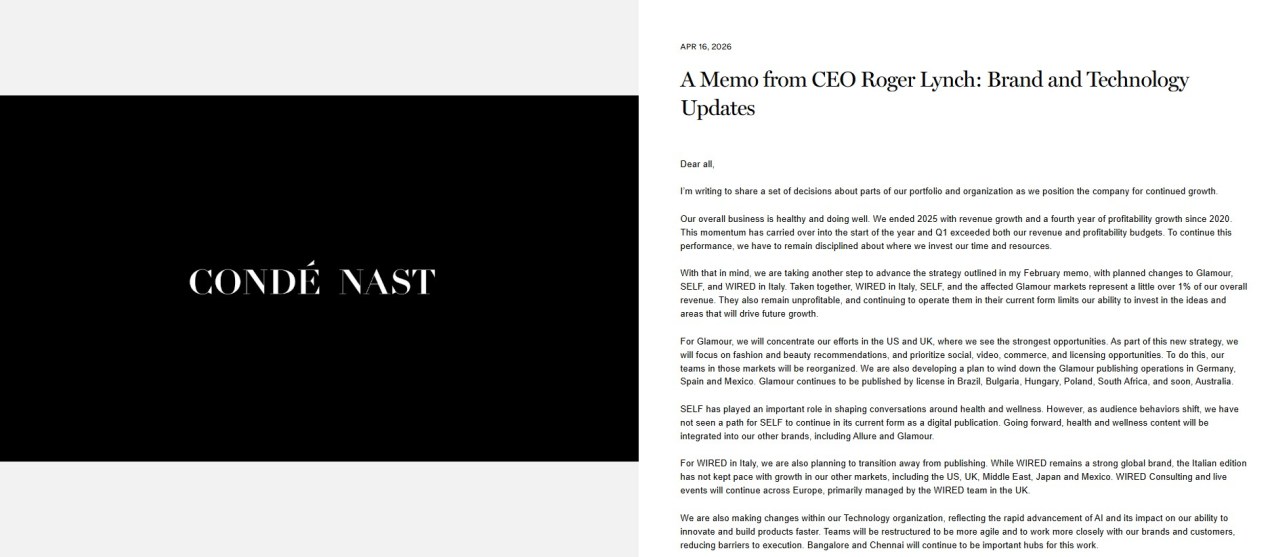
So Wired Italia is “transitioning away from publishing”. The decision was communicated all of a sudden to the editorial staff a couple of days ago. Whatever that means – and to anyone covering climate this wording has a deep resonance – it’s sad news. These days have been full of calls, whatsapps and comments. It’s been like an earthquake in our relatively small bubble of journalists and passionate news readers.
It’s unprofitable, says ceo Roger Lynch; or, at least, it can’t keep the same pace as other editions globally. I’m not sure that’s totally true, but we must take it as it is.
Surely enough, it’s easier to cut a newsroom in Italy when you’re in New York, and there’s no tie to the people: just figures count.
Anyways, much of the conversations I held contained interesting perspectives. I’ll try to share them.
It’s thinkable that this could be a Trump-style negotiation tactic to get to a smaller reduction of the operations, for example cutting just the printed quarterly edition: “We were about to obliterate you, so be thankful you survived. But now you have to accept we’re changing our business model”. So journalists, for example, – and this is strictly my opinion -, can be put on events. It’d be suicidal to completely delete the brand: so why don’t use it to create a sort of TedX? A Wired X, with a dedicated editorial staff to make interviews and all the writing parts.
Is is still journalism? I don’t know. Journalism’s definition is so vague, nowadays, that, given the doubt, the answer might easily be yes or no depending on who you ask. Not likely that a court can condemn the publisher, in this case: at least, Conde would have given the staff the opportunity to go on, though with another project.
Events may moreover help collecting sponsors, and are cheaper than publishing a magazine: the videos of the talks can be spread all around on the social media, thus making money. And, obviously, like it happens with Ted, you can always invite people not just on a relevance basis, but on their will to contribute to the cause. Simply put: you pay, and you get there, so you can add it to your resume and Linkedin profile.
Events are pivotal in todays’s journalism. Two years ago Orson Francescone of the Financial Times (he’s managing diretor of FT Live) told me these kind of fireplace chats are central in their strategy: and, with a good interviewer, you can even find relevant news to be spread (particularly if you add a good press office).
Whether this would give the society the same benefits as a magazine like Wired Italia, it’s arguable. No inquiries, no study of the documents, no boots on the ground: in the best case, just desk journalism. But this is a global trend.
Let’s move on.
In Lynch’s note he talks about the role of AI (artificial intelligence) in the future of the company. This leads to another consideration: publishers have always made cuts to the personnel. But once the limit was that you still needed humans to make the magazine. Today that limit has dropped: with AI you can easily get the job done quite without any human help. You can keep the Italian brand alive, for example, just translating contents from the others editions, with little supervision. And, by doing so, you can still sell advertising and benefit from the SEO. This is, once again, strictly my opinion: I have no elements other the Lynch’s public note to confirm it.
On a more personal side, another thing I noticed is that this sad event boosted cooperation between us colleagues. It’s always true we need a crisis to remove (a part of ) our self defences. Lots of colleagues called me, and I’ve done the same. Yes, it enhanced our will to cooperate, not resigning ourselves to be monads. Which, by the way, helps the publishers: atomized work means you have the same problems of a hundred colleagues, but you don’t know it, and therefore you can’t join forces. Well, that’s a lesson.
I’ll add a couple of things. Wired Italia’s probable stop to publications also showed me how much our job has been appreciated over the course of the years. That’s heart-warming, and thought-provoking: because people don’t usually spend their days praising you, and sometimes the risk is to forget it.
And finally, another consideration: a former press officer told me “I can’t stop thinking over it, Wired’s journalists were among the fews that almost always replied to my pitches, and motivated a denial”. I won’t add a word, but thanks.


Pingback: What Condé Nast’s ceo Roger Lynch thinks about the company’s future | Journalism, media and points of view